
Automatic Swim Race Analysis: Why Detection Changes Everything
Analysis that detects the pool, the swimmer and every event in phone video: why it reaches every swimmer, not a few, and how it compares with today's methods.
Also in Svenska
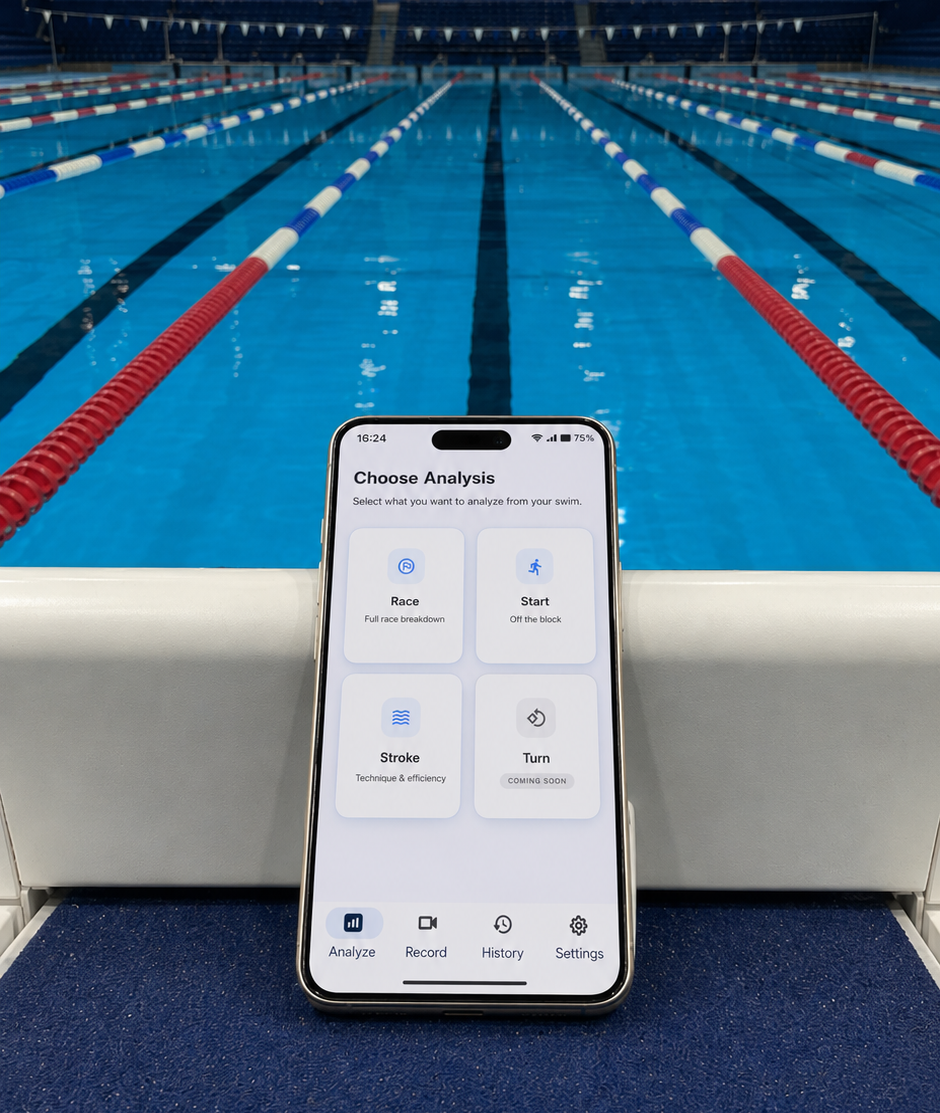
Most race analysis in swimming is still done by hand: a coach films a race, scrubs through the video, marks the 15-metre line and the wall touches by eye, counts strokes, and types the splits into a spreadsheet. The analysis is only as good as the coach's patience, and it happens hours after the race, if at all. The next step is analysis that detects the pool, the swimmer and the events in the footage on its own, the moment the recording stops. This article explains what automatic detection means, why it changes who gets analysed, and how it compares with the ways swimmers are analysed today.
What is automatic swim race analysis?
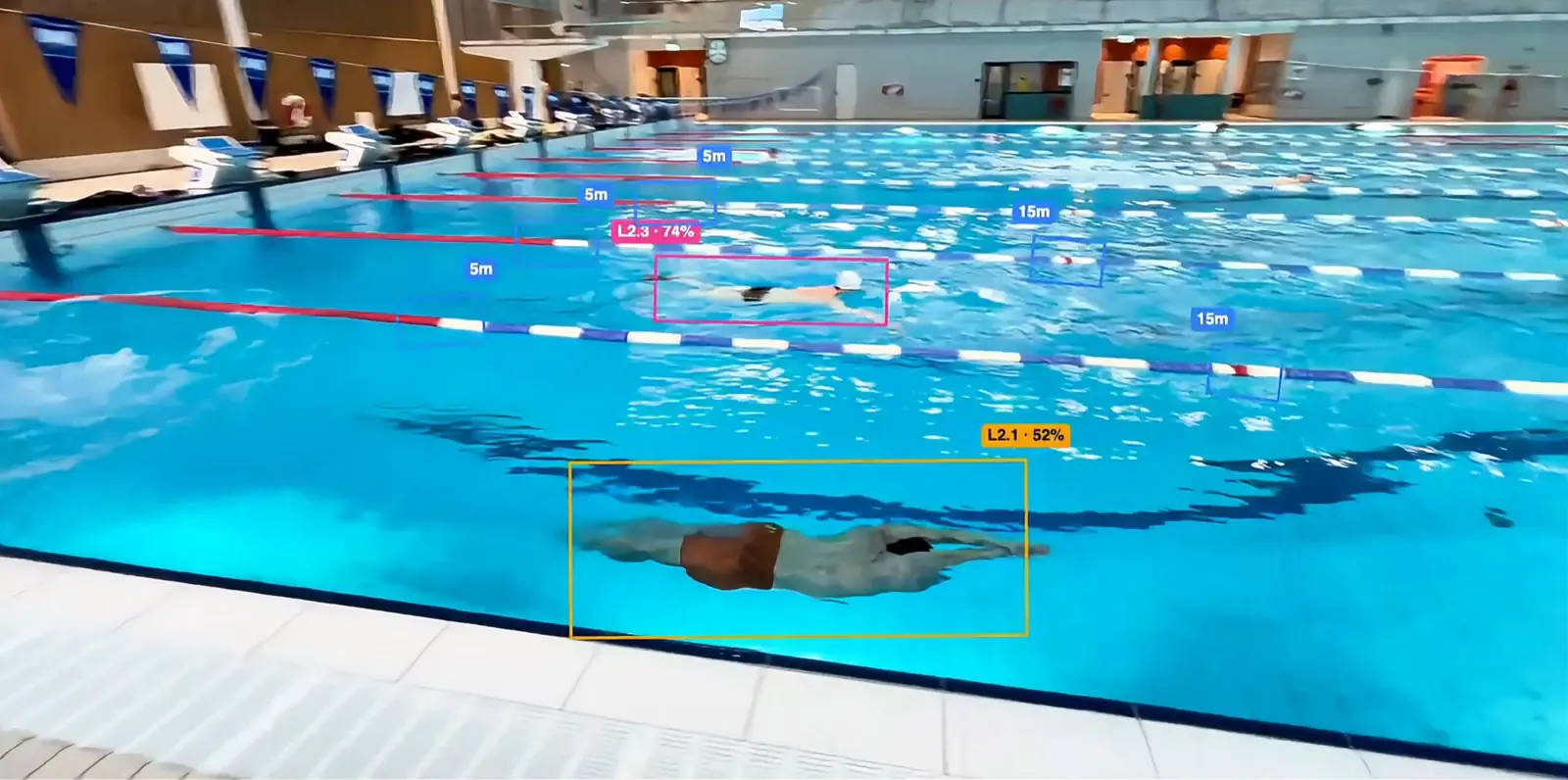
Automatic swim race analysis is software that finds the pool walls, the swimmer and the key moments of a race in ordinary video, and measures them without a person marking each frame. The coach records from a phone at the side of the pool, and the software works out where the 15-metre mark is, when the swimmer breaks out, when the hand touches, and how many strokes were taken per length. Those are the raw inputs to measurements like stroke length and stroke rate.
The difference from a video player with a stopwatch is the detection. A player shows you the frame; detection tells you what is in it. Once the software knows where the walls are in the image, every distance and every split can be derived instead of clicked.
Why detection is the part that matters
Manual analysis has a hidden cost that has nothing to do with accuracy: it does not scale. A coach with twelve swimmers in a heat cannot analyse twelve races on deck, so the analysis goes to the swimmers who are already fastest or already in trouble. The rest get a split time and a nod.
Detection removes the person from the loop for the measurable parts. The consequences follow in order:
- Every swimmer gets analysed, not the two the coach had time for. A junior in lane seven gets the same breakout distance and stroke count as the club record holder.
- The analysis exists while the moment is fresh. A swimmer shown their turn at the warm-down pool learns something. The same clip a week later is history.
- The numbers are comparable. A 15-metre time marked by eye drifts by a few frames between analysts. A wall detected by the same model every time does not.
The first point is the one that changes coaching. Analysis has been a scarce resource, rationed by the coach's hours. Detection makes it a default.
How Swim Analyzer approaches it
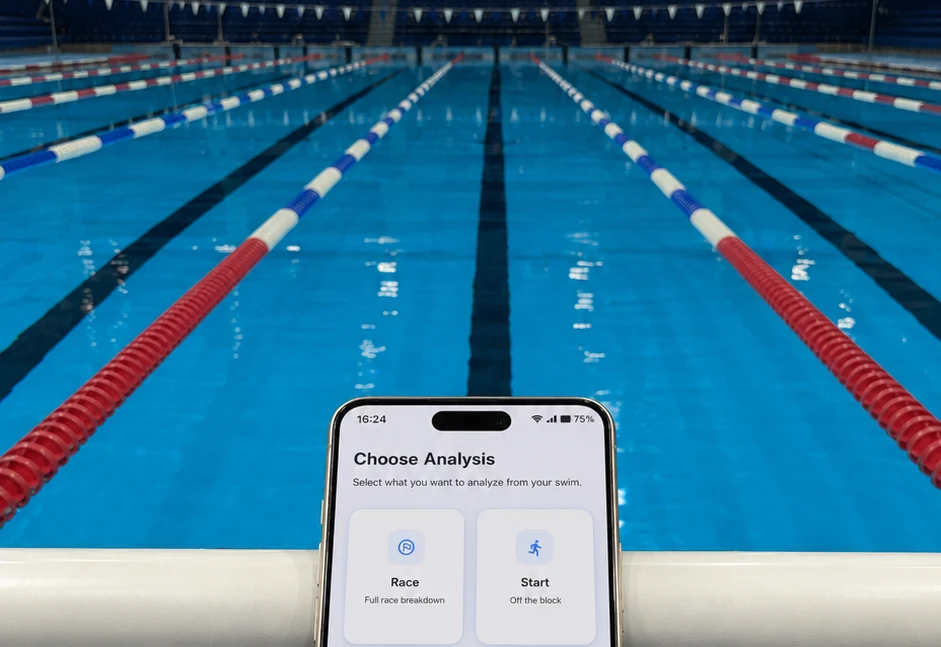
Swim Analyzer Pro is built around a single phone camera and no rig. The parts that exist today are the recording and review side: slow motion, frame-by-frame scrubbing, a quick-analysis mode where the coach draws angles and lines on a paused frame, and race, start, stroke and turn analyses that are saved and compared over time.
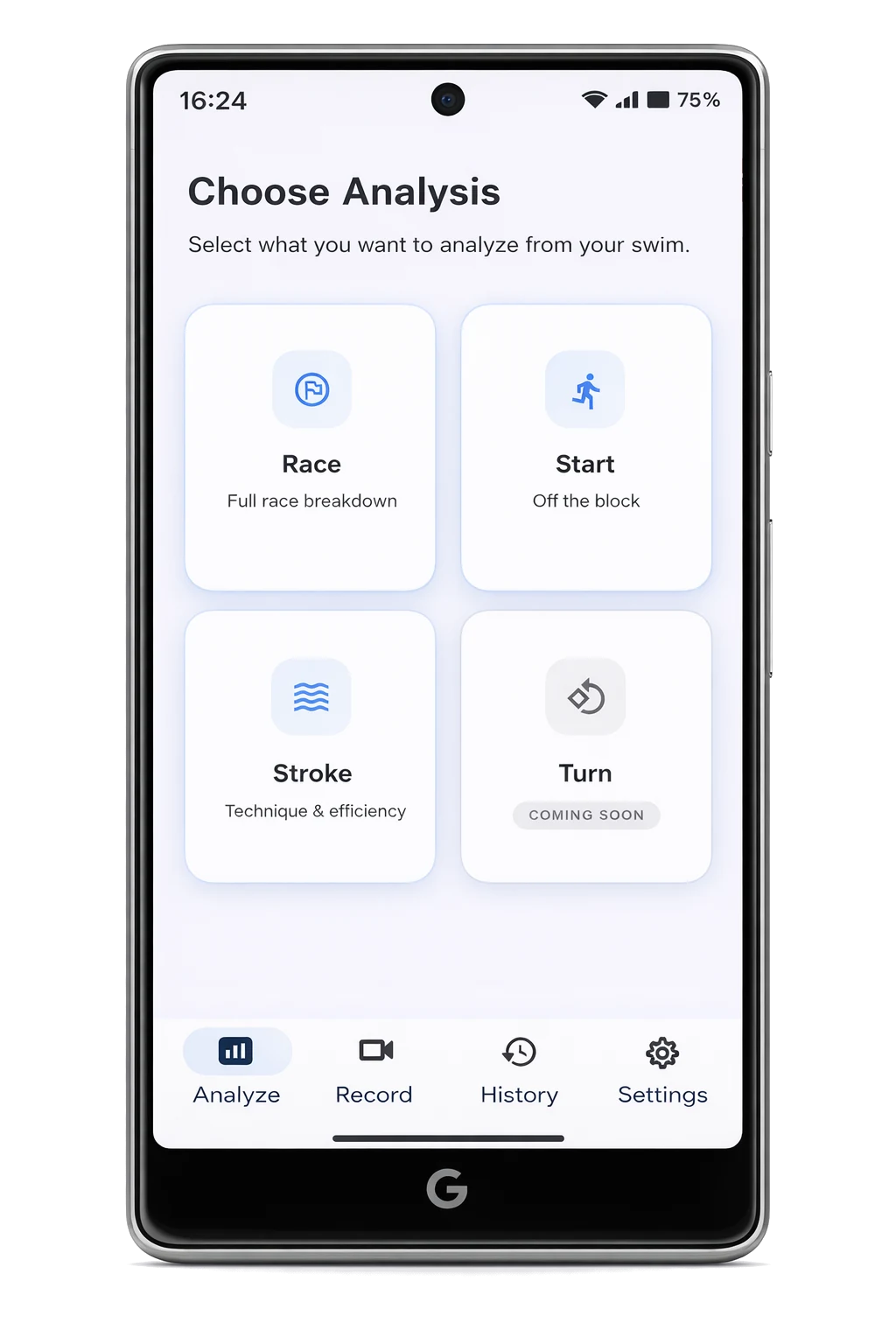
The detection layer is where the product is going. The app already ships a pose model that locates the pool walls in the footage and places the distance guides from that geometry, rather than asking the coach to drag them into place. The same approach extends to the swimmer: once the model tracks the body through the water, breakouts, stroke counts and wall touches become events the software finds rather than marks the coach makes.
The goal is not a fancier video tool. It is that a coach presses record, and a few moments later has a race report for every swimmer in the heat, on the phone that took the video. With club sync, each analysis already lands in the swimmer's profile in Swim Suite, next to the training that produced it. What the app measures today, phase by phase, is laid out in the swimming software that measures the swimming.
How it compares with other analysis methods
Each existing method solves a real problem, and each has a limit that detection from ordinary video does not.
| Method | What it measures well | Where it stops |
|---|---|---|
| Stopwatch and clipboard | Splits and stroke counts in real time | One swimmer at a time, and only what the coach sees live |
| Manual video review | Anything visible in the footage, frame by frame | An evening per handful of races, and numbers that drift between analysts |
| Wearable sensors | Stroke rate, laps and timing from the swimmer's body | Every swimmer needs a device, and position in the pool is not measured |
| Lab and fixed-camera systems | Precise biomechanics from calibrated multi-camera rigs | A facility, a specialist and a few swimmers a year |
| Automatic detection from phone video | Walls, breakouts, strokes and splits found in ordinary footage | Accuracy depends on camera position and glare, so confidence has to be shown per event |
The lab system is the accuracy benchmark, and nothing on a phone will replace it for a national team's biomechanics study. But the lab analyses twenty swimmers a year. A club coach needs to analyse twenty swimmers a week, and for that the constraint has never been precision. It has been time. For where video analysis sits among the other kinds of club software, see the five types of swim software.
What "accessible" means in practice
Accessible analysis is analysis that happens without anyone deciding it should. Consider a Saturday club meet with 40 swimmers and two coaches:
- With manual video review, perhaps four races get analysed the following week, chosen by whoever the coach was worried about.
- With detection running on the recordings, all 40 races produce a report by the time the swimmers are dressed, and the coach's job shifts from measuring to explaining.
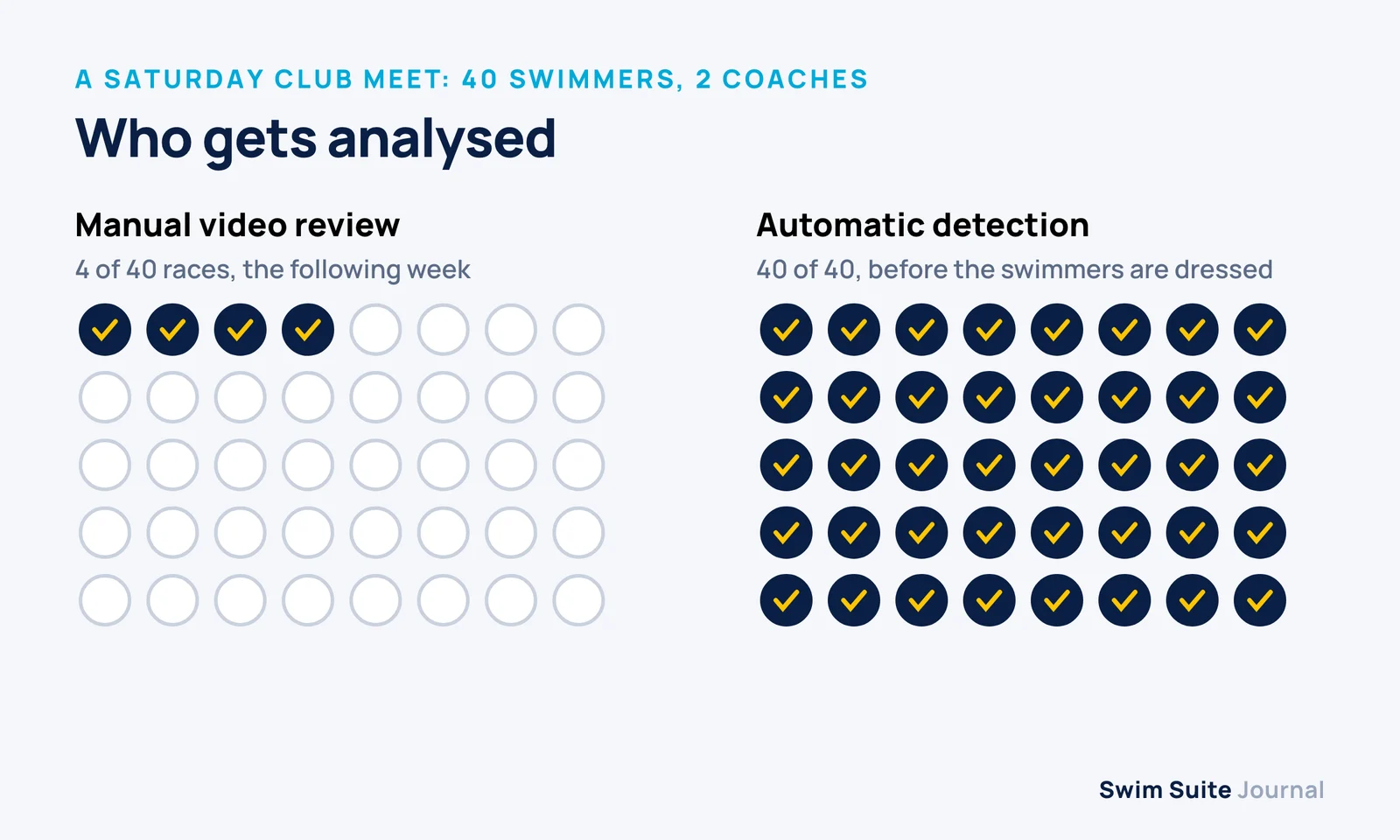
That shift, from measuring to explaining, is the whole point. Coaches are not short of opinions about technique. They are short of evidence they did not have to spend an evening producing.
What still has to be true
Automatic detection is only useful if it is trusted, and trust is earned by three things:
- Showing its work. Every detected event should be a frame the coach can jump to and disagree with. A number without a frame is a guess.
- Knowing when it is unsure. Glare, a crowded lane or a camera that moved should lower the confidence shown, not produce a confident wrong answer.
- Getting cheaper to correct than to redo. If fixing a missed wall takes one tap, the coach keeps using it. If it means starting over, they go back to the stopwatch.
Those are the standards Swim Analyzer is being built against, and they are also the questions to ask of any tool that claims to analyse a race automatically.
Does automatic analysis replace the coach?
No. It replaces the clicking. The coach still decides what the numbers mean for this swimmer, this week, and that judgement is the part no model has.
What camera does it need?
A phone, held or mounted at the side of the pool with the lane in frame. The software is designed for the footage a coach can actually get, not for a camera position that requires a facility. The Swim Analyzer Pro app is free to download, and every Swim Suite plan includes it; see plans and pricing.
Can it analyse training as well as races?
Yes, in principle. A timed 100 in training is the same footage as a race, and the same walls, breakouts and stroke counts are there to detect.